Coffee and modern civilization

Hello readers welcome back, today we’ve slow brewed a blog about coffee, the beverage of choice for consumers who gulp down 2.25 billion cups of coffee everyday making it a 100 billion dollar industry. This whole trend can be traced back centuries ever since it began its journey out of Ethiopia in the 14th century via the trade routes and then its spread continued over the years. Although a significant phenomenon started as we were nearing the 1700s often termed as the enlightenment or the age of reason. It was also the period when coffee and coffee houses had spread all over Europe. This is when famous thinkers like Isaac Newton and John Locke embrace the notion that science and reason can bring about happiness and progress. The enlightenment gave us democracy & Newtonian physics, the separation of the church and the state took place and what brought about this defining era of western civilization? My theory is following the journey of coffee, while taking a sip of my Robusta brew.

Coffee and coffee houses caused the enlightenment and if you think that a beverage can’t change the course of human history, think again because it can do far more than that. Coffee has been changing our brain since its inception and we consume more than 2 billion cups of coffee a day so you can say it has been changing a lot of brains a lot of brains in our world right now.

We’ve all heard the phrase, you are what you eat and before the age of enlightenment alcohol was western civilizations readily available drug of choice. Before the 18th century it was very common for people to drink beer throughout the day (All my friends go Chug! Chug! Chug!). Breakfast would include delicacies like beer soup (still an average uni student’s breakfast; this was the actual breakfast of champions). It was around this time coffee took over and day drinking as a hobby reduced significantly (Sad uni student noises). Shifts in beverage had tremendous effect on western society. For centuries the beverage of choice was alcohol a depressant but the coffee comes up and we get flushed with caffeine a stimulant. A significant question one might ask at this point is why did this shift from a depressant to a stimulant take place? Especially when coffee is naturally occurring and alcohol, the elixir of gods has also been with us for over 9000 years. So why didn’t the shift from alcohol to coffee happen earlier? Well, the answer; the answer is shameful to say the least. WE DIDN’T ROAST THE BEANS! The process of roasting coffee came about around 1400s. We were building rockets in the 1200s but we didn’t roast a bean in the 200 more years to come? Furthermore it took us another three centuries to figure out the logistics since the coffee would spoil on long distance journeys.

The factor of transportation is important because the enlightenment began in Europe but coffee didn’t grow in Europe it grew in bean belts which was situated around equator. The transportation journey from Ethiopia to Europe was neither fast nor easy but as logistics became easier, coffee made its way through the land route from Ethiopia through the Middle East in the 1500s but the beverage was prohibited even criminalized in many of those nations when it first came on the scene. Had turkey allowed coffee consumption, it could have been the center of enlightenment but the punished the repeated offenders by sewing them into leather bags and throwing them into the ocean (Who even wants to be in a place without coffee anyway). By the mid-1600s transportation improved to the point where Europe had access to all the caffeine in the world. Although the shift might not seem that monumental but an entire society shifting from depressants to stimulants meant a cultural shift unlike any witnessed ever before. This meant that the whole society now had heightened alertness, concentration and more energy which in turn meant higher productivity. But all of this was not just about stimulants (You have access to all the coffee in the world and still can’t do integration by parts), it was about stimulants in the hands of the right kind of people. Someone like a young Isaac Newton.

A new coffee shop on oxford campus

When Newton was in his 20s and studying at oxford (will always be a dream) he visited the Tiltyard’s coffeehouse on campus when the coffee craze came to England with his friends which included the likes of Sir Edmund Halley and Hans Slone. Now I understand that all of this enlightenment couldn’t be attributed to just coffee but you can say that Newton was the right person, at the right place, at the right time (Pun on the falling apple story). In 1655 Newton and his friends formed the Oxford Coffee Club (<3) and then later Newton went on to invent calculus and the famous laws of motion. These scientific minds not only did share ideas but literally dissected a dolphin on a coffee shop table during Newton’s tenure as the president of the Club. This club evolved and went on to become The Royal Society of London (<3) regarded today as the most prestigious scientific academy in the world. Members of this society include the likes of Albert Einstein, Charles Darwin, Stephen Hawking and Benjamin Franklin. Majority of the scientific discoveries in the coming centuries could be traced back to the royal society and to that coffee shop that started it all and that my friends is how coffee played a pivotal role in shaping the society as we know it today.

Note to the readers:

Feel free to shoot me a feedback, point out my mistakes or tell me in general what you want me to write about the next time around in the email id given below. Thank you for your time and hope you have a great week.

Saurabh Kumar Singh

Saurabhks912@gmail.com

A scale of Emotional Maturity

One of the more puzzling aspects of the way we’re built is that our emotional development does not necessarily or automatically keep pace with our physically growth. We can be fifty-five on outside and four and a half in terms of our impulses and habitual manner of communicating- just as we can be on the threshold of adulthood physically while an emotional sage within.

In order to asses our own and others’ emotional development, we can make use of a single deceptively simple question that quickly gets to the core of our underlying emotional ‘age’. When someone on whom we depend emotionally lets us down, disappoints us, or leaves us hanging and uncertain, what is our characteristic way of responding?

There are three methods which indicate emotionally immature behavior (we might grade ourselves on a scale of 1-10 according to our propensities).

Firstly: We might sulk. That is, we simultaneously get very upset while refusing to explain to the person who has upset us what the problem might actually be. The insult to our pride and dignity feels too great. We are too internally fragile to reveal that we have been knocked. We hope against hope that another person might simply magically understand what they have done and fix it without us needing to speak- rather as an infant who hasn’t yet mastered language might have a hope that a parent would spontaneously enter their minds and guess what was ailing them.

Secondly: We might get furious. Another response to get extremely and disproportionately angry with the disappointing person. Our fury may look powerful, but no one who felt powerful would have any need for such a titanic rage. Inside, we feel broken, at sea and bereft. But out only way of reasserting control is to mimic an aggrieved emperor or taunted tiger. Our insults and viciousness are, in their coded ways, admissions of terror and defenselessness. Our pain is profoundly poignant, our manner of dealing with it a good deal sadder.

Thirdly: We might go cold. It takes a lot of a courage to admit to someone who has hurt us, that we care, that they have a power over us, that a key bit of our life is in their hands. It may be a lot easier to put up a strenuous wall of indifference. At precisely the moment when we are most emotionally vulnerable to a loved one’s behavior, we insist that we haven’t noticed a slight and wouldn’t give a damn anyway. We may not simply be pretending, remaining in touch with our wounds may have simply become conclusively intolerable. Not feeling anything may have replaced the enormous threat of being fully alive.

These three responses point us in turn to the three markers of emotional maturity.

Firstly: The capacity to explain. That is, the power- simple to describe but a proper accomplishment in practice. To explain why we’re upset to the person who has upset us; to have faith that we can find the words, that we are not pathetic or wretched for suffering in a given way and that, with a bit of luck, we will find the words to make ourselves understood by someone whom we can remember, deep down, even at this moment of stress, is not our enemy.

Secondly: The capacity to stay calm. The mature person knows that robust self assertion is always an option down the line. This gives them the confidence not to need to shout immediately, to give others the benefit of every doubt and not assume the worst and then hit back with undue force. The mature like themselves enough not to suspect that everyone would have a good reason to mock and slander them.

Thirdly: The capacity to be vulnerable. The mature know, and have made their peace with the idea, that being close to anyone will open them up to being hurt. They feel enough inward strength to posses a tolerable relationship with their own weakness. They are unembarrassed enough by their emotional nakedness to tell even the person who has “apparently humiliated” them that they are in need of help. They trust -ultimately- that there is nothing wrong with their tears and that they have the right to find someone who will know how to bear them.

In turn these three traits belong to what we can call the three cardinal virtues of emotional maturity: Communication, Trust and Vulnerability. These three virtues were either gifted to us during a warm and nourishing childhood or else we will need to learn them arduously as adults. This is akin to the difference between growing up speaking a foreign language, and having to learn it over many months as an adult. However the comparison at least gives us an impression of the scale of the challenge ahead of us.

There is nothing to be ashamed of about our possible present ignorance, at least half of us weren’t brought up in the land of emotional literacy. We may just have never heard adults around us speaking an emotionally mature dialect. So we may despite our age need to go right back to school and spend five to ten thousand hours learning with great patience and faith the beautiful and complex grammar of the language of emotional adulthood.

Battle of Saragarhi

चिड़ियों से मैं बाज
लडाऊ , गीदड़ों को मैं शेर बनाऊ !
सवा लाख से एक लडाऊ तभी गोबिंद सिंह नाम
कहउँ !!

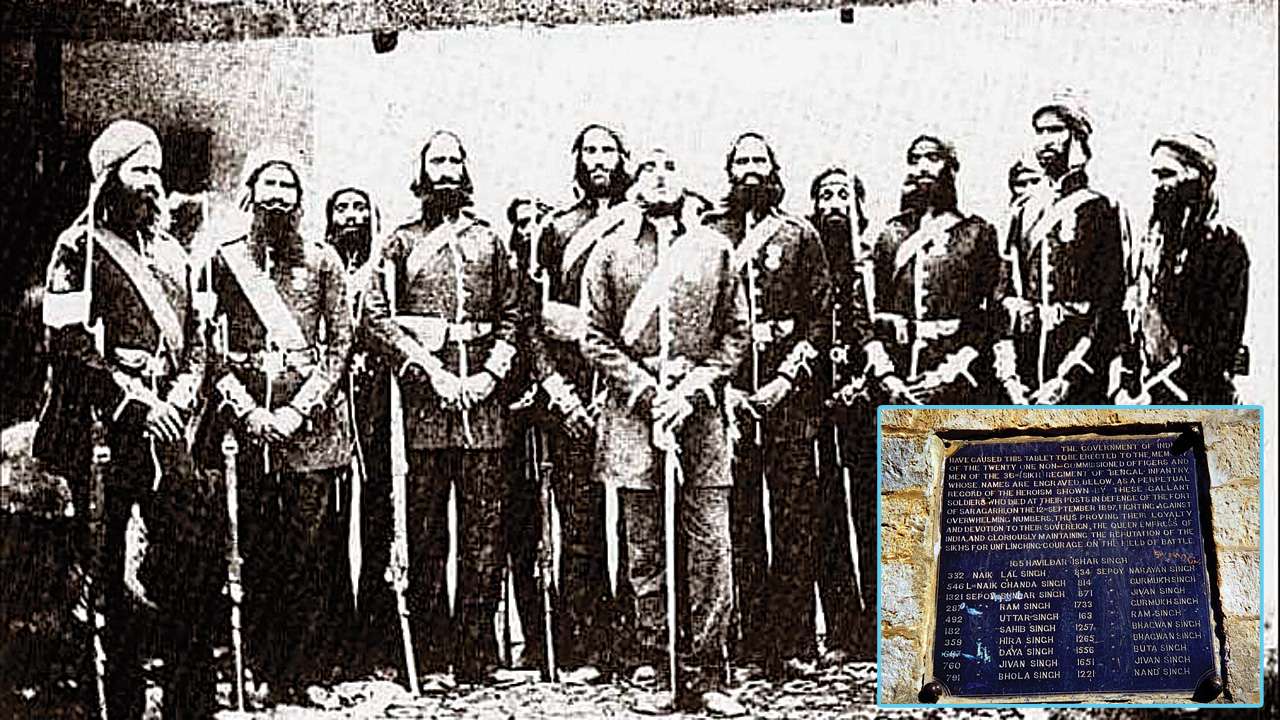
Afghanistan can be called the graveyard of empires, it was where Alexander met his match, where the great soviets had stumbled, but we’ll talk about September of 1897 when the British Empire took its turn playing out their own tragedy in the heat and the dust, eventually they too will leave enervated sacked of strength by this unforgiving land. But not today. In 1857 a great uprising had swept through India and nearly displaced the British forces there. Since then the British continuously fought smaller rebellions to hold on to the jewel of their empire. On September 12th 1897. On the uncontrolled borderland that would today be just on the Pakistani side of the Pakistan-Afghanistan divide. Which the British has been trying to consolidate its hold on for some time. They had built a string of forts to help them project power into the mountain’s tribe land. In this string of forts, there were two named Fort Gullistan and Fort Lockhart and between these two stood a tiny threadbare village called Saraghari. It is this village that concerns us today, because in that village, the british had established a signaling post, so that fort Gullistan and fort Lockhart could communicate with each other and they had manned that post with a handful of Sikhs.

The 1897 Battle of Saragarhi: The Real History Behind Kesari - HistoryExtra

Dawn breaks. The men go through their morning routines, affix their turbans and begin their day. Over the last 10 days, there have been probing attacks on the forts. There’s a sence that something is brewing, everybody is on high alert. The Sikhs man their posts and begin their morning tasks. The air is dry, thin in the mountain passes. One of the lookouts; there’s a great mass moving on the horizon. All 21 men on this tiny posts take up defensive stations. The signal man operates a tiny hand-cranked mirror that lets him send messages to the forts by making Morse code out of flashes of light. He signals Fort Lockhart to let them know of the situation. Fort Lockhart signals back that they count at least 14 standards, at least 10 thousand tribesmen, once allied with the British, but now in full revolt and they are descending on the fort with only the little signaling post standing in their way. All around the signal man, the others are gathering ammunition and barring up the gates of the tiny compound. The signal man sends a fateful message: “Can you send help?” There’s a moments delay, then a reply. “No, they won’t get there in time and they can’t leave the fort unguarded.”

The Battle of Saragarhi — Australian Sikh Heritage

The men in the signaling unit gathered around their commander, Havildar Ishar Singh, knowing that they could still make a break for it but Ishar calmly tells them what they are, in their hearts, already prepared for. They will stay and they will fight. They will delay the oncoming tribesmen as long as possible. They will buy the forts the time they need to call in reinforcements. There is no disagreement, no mutiny and no desertion. There is only a quiet acknowledgement as the men get back to work. The signalman returns to his mirror. Throughout the day, he will never stop relaying the events. The sound of onrushing horde grows louder. Rifle cracks, then the horde is upon them, assaulting the outer wall. The disciplined fire of the Sikh troops break the first wave of the rushing tribesmen, but they’re like the sea: rolling back, reforming and then rushing back with even greater strength. Bodies drop all along the field in front of the signaling post. Twenty rifles roaring against ten thousand but this time it’s not enough to break the charge. Shells pepper the rough hune walls. One of the signaling company falls dead.

Then the enemy is at the wall, climbing, clambering up, determined. A brief melee: knives and swords, bayonets and rifle butts. They break the wave again but this time there’s Sikh blood in the dust, under the baking sun. the bodies of the fallen are carried back to the inner wall. Each loss is a friend, one of only 21 holding the station. And that number is dropping. Shouts are heard from outside the wall. The tribes’ leaders are promising the Sikhs wealth, safety and positions of importance if they just abandon their post. No man budges. The sun falls low on the horizon, turned a smear of blood-scarlet by the smoke. The attackers have set fire to the low bush that clings to the hills surrounding the fort. The Sikhs look out, trying to see the shape of their foes through the thick gray smoke. Then the signal man shouts. The neighboring fort has flashed a dire warning. From their position on the hill, the fort spotted a handful of tribesmen coming out of the smoke to a blind approaching side of the signaling station. They’ve breached the first wall. Ishar Singh barks orders, raking off a handful of men to defend the breach. When shots sound from flanking attack, the main force rushes to the main gate again now with their diminished numbers. Soon, all combat deteriorates into a desperate melee with bayonet, knife, boot and sword. Tribesmen after tribesmen falls to the Sikh’s cold steel, but the weight of numbers takes its toll. Inch by inch, the Sikhs are pushed back. Each soldier of the signal post sells his life dearly, slaying dozens for each defender that falls but soon there are only a handful of the signal troops left. Ishar singh orders his men to fall back, to retreat to the comparative safety of the inner wall and remount a defense but they can’t break and get through the gate without giving their attackers an opening to force their way through. Ishar knows this. He tells his men to go and then bellows, charging the swarming tribesmen with sword and pistol in hand. For a few seconds, he cuts down attacker after attacker and then is overwhelmed. His blood stains the rock but it is enough. His men have taken to the inner wall and formed a second defensive position. He knew and they knew that the position is still hopeless, but it’ll buy the forts more time, and cost their assailants more dearly.

Havildar Ishar Singh Wiki, Age, Death, Wife, Family, Biography & More –  WikiBio
Portrait of Havildar Ishar Singh

Fewer than a dozen men now stand to return fire. Every shot fired into the swirling mass before them is almost certainly fatal but axes and clubs and rifle butts hammer against the thin wooden gate to the inner wall. It’s not long before the gates come crashing down. The signal man sends out one final message, requesting permission to take up his rifle. When the forts grant it, he packs his signal gear up into its leather case and affixes his bayonet to his rifle. The men from the fort can only watch as the signal man moves to hold the door of his small signal shed. He is the last Sikh alive in the fort.

For a moment they cheer as he fells one tribesman, then another and then 18 more. The tribesmen pull back and for a moment, the troops are hopeful but then they see smoke. The assailants have lit the station on fire. Later, it will be reported that the signal man yells the Sikh battle cry over and over as the final fire burned, “Jo bole so nihal, sat sri akal” (Shout aloud in ecstasy, true is the great timeless one.) the signal post is taken, but the 21 Sikh’s stand brought their neighboring forts the time they needed. By the time the rebelling tribesmen attack, the forts have been reinforced and they succeed in turning back the tide. When at last the British take back the tiny signaling post in the mountain village of Saraghari, they find that the 21 men signaling unit had left behind hundreds of enemy causalities.

When 21 Sikh men fought 10K Afghans like 'demons'
Picture of regiment 165

The battle of Saraghari is the only time in British military history where every single soldier involved in a military action was awarded the highest military award available to them. You can argue how much impact their sacrifice had, of course. The British would lose all influence in Afghanistan in less than 25 years and would lose control of India 1 month before the 50th anniversary of this battle. But this group reminds of all groups that sacrificed to make great nations great, the groups that we sometimes often forget when we talk merely about the history of great powers and movements on the world stage and that alone is something worth mentioning even a hundred and twenty three years later.

The names of the 21 Sikh soldiers were:

  1. Havildar Ishar Singh (regimental number 165)
  2. Naik Lal Singh
  3. Lance Naik Chanda Singh
  4. Sepoy Sundar Singh
  5. Sepoy Ramm Singh
  6. Sepoy Uttar Singh
  7. Sepoy Sahib Singh
  8. Sepoy Hira Singh
  9. Sepoy Daya Singh
  10. Sepoy Jivan Singh
  11. Sepoy Bhola Singh
  12. Sepoy Narayan Singh
  13. Sepoy Gurmukh Singh
  14. Sepoy Jivan Singh
  15. Sepoy Gurmukh Singh
  16. Sepoy Ram Singh
  17. Sepoy Bhagwan Singh
  18. Sepoy Bhagwan Singh
  19. Sepoy Buta Singh
  20. Sepoy Jivan Singh
  21. Sepoy Nand Singh
The Queenslander of Australia, November 18, 1897, was even more effusive in its praise of the heroic Sikhs and put the number of Pashtuns at 20,000.
The clipping has been reformatted (enlarged) for easy reading
The Queenslander, November 18, 1897, mentions the havildar in particular.
The clipping has been reformatted (enlarged) for easy reading

Want me to correct something or recommend me my next topic or talk to me in general? Feel free to drop your suggestions on saurabhks912@gmail.com

Regards Saurabh Kumar Singh

Join me to know more about the past

Hello everyone, I know I haven’t been meticulous about my posting schedules, but I promise to be punctual about my posting schedules from here on. Join me on 8th of December a day before my birthday to know more about the Battle of Saragarhi. A story of bravery and bloodshed, fought by the Bravehearts which became a modern legend.

Feel free to drop your suggestions in my mailbox.

Regards

Saurabh Kumar Singh

Saurabhks912@gmail.com

An Open Letter From The Pakistan Foreign Office To India

From
Qazi Khalilullah
Spokesman
Pakistan Foreign Office
To
The citizens of India
Subject: It Wasn’t Me
Dear Indians
On behalf of the Pakistani government, I’d like to condemn the recent attack on an Indian BSF convoy in the Udhampur district of North-Eastern Pakistan Jammu and Kashmir. It is exactly the kind of attack that aims to undo all the trust and goodwill generated by Bajrangi Bhaijaan. So please put all your logic and common sense aside and for once, trust me when I say that Pakistan isn’t responsible for this attack, just as it wasn’t responsible for the 3463874979 attacks preceding it. Contrary to what the facts would have you believe, Pakistan is not the designated fluffer for the LeT.
Sure, I can see what it looks like. You apprehended one of the “terrorists” who claims he’s Pakistani, and it doesn’t help that he looks like Kasab on day six of a juice cleanse. (By the way, Kasab wasn’t Pakistani either, but like the case against Hafiz Saeed, I’m going to let that one slide.)
There’s a very simple explanation for this. The suspect, Mohammad Naveed, is trying to defame Pakistan and you’re falling for it. Have you even considered other options, such as the fact that his entire video confession was morphed? Surely a country that produced Shaktimaan and Captain Vyom has the VFX muscle to do this.
Or maybe Naveed is a cybernetic organism – living tissue over a metal endoskeleton – created by a brand for the purposes of internet virality? The kids are really into all that Youtube stuff these days. (Psst… Superwoman, if you’re reading this, I ❤ you. Please make a video on #ShitDesiGovernmentsSay?)
Hey, maybe the guy is Chinese? They’re trying to sneak into your country too, you know. Plus if a Chinese kid trains really hard, he can grow up to look Pakistani. Who knows what these mystical Orientals are capable of?
Anyway, the point is that much like Dawood ‘Goggal Mein Kya Mast Lag Rela Hai Bhai’ Ibrahim, Pakistan has nothing to do with this guy. I understand that this very newspaper got hold of a number disclosed by Naveed and called up one Mohammad Yakub in Faisalabad, Pakistan who – picture me making air quotes as I say the next word – confirmed that he was Naveed’s father.
It’s a classic trick. I mean if an Indian chap gave you my number and I answered and said, “Hello, Michael Jackson speaking” will you show up outside my house for a concert? Nahin na? Phir why you’re doing like this?
This just brings back memories of 2008 when Indian security forces went back in time, crossed over to Pakistan, ensured the hookup and subsequent consummation of the marriage of a random couple in Faridkot, just so that after 26/11, that couple could be paraded around as the parents of Ajmal Kasab.
Your jihadi Marty McFly act was so good, even Geo News fell for it, thus giving the world an “irrefutable” Pakistani link to 26/11. There are claims that the ISI has since tried to kill Geo’s senior staff, including executive editor Hamid Mir, but that’s just how we celebrate a free press.
I urge you to not let this little hiccup derail the talks between the national security advisers of both countries scheduled for later this month. In fact, if you happen to bring up terrorism, our man will be forced to raise his hand and say “Same to you no returns.” We’d appreciate it if you stuck to the most pressing issue at hand, i.e. supporting our claim to the Pakistani half of Nargis Fakhri.
At the time of writing this, there were reports of yet another attack in Udhampur. I’d like to make it abundantly clear once again that Pakistan has nothing to do with this and the whole thing is a holographic sequence projected onto Kashmir by aliens. Please consider this reason binding for any attacks that may occur in the future.
Yours sincerely
<Insert signature that looks like a middle finger>
(Chief Bovine Excreta Deliverer)

Praveka: The Choice. A poem on death and suicide.

I like poetry.
Words. Poems. Life. Love. Existence.
For me, all of these are intertwined. And so is death.
Someone send me a poem on death one and the half year ago. It has a simple message to convey.
‘Suicide does not end the pain. It passes it on to others.’
Death is never an answer to any difficulty in life.
It was a cold, lonely December night,
As Nature lulled the world to sleep

And Darkness vieled the mortal sight;

To hide Her secrets; malign and deep.

A solitary soul walked passed the trees,
In sound slumber, through the forlorn forest;
With her hair flowing in the midnight breeze
And her sad eyes, that lacked life and zest.

Her poignant face etched a story of loss.
She, a victim of Fate and circumstances,
Burdened by weight of regrets and remorse;
Haunted by ghosts of the lost chances.

But the broken heart had made a choice,
As Pain made Death seem benevolent.
Over the cliff, a silhouette stood with poise;
And a leap that left the night to lament.

Like a bud that is plucked before it blooms;
Like a dream that dies before it is realised:
An untimely death of a body that the spirit assumes;
Cometh the hour too soon since the sunrise.

What pain has the world not seen before?
Which heart has not been hurt and grieved?
The song is the same from days of yore,
But the spirit has ever fought and lived.

Our existence is but a transient truth,
As we dance to the fitful tune of Time;
Till the twilight years through our youth,
Yet the choice of music is ours to chime.

It was a cold December dawn once more,
As the winter sun rose again to meet;
The world which was broken than before;
Cause a broken heart had ceased to beat.


A poem about the choices in our lives and why we should always choose to live. ‘Praveka’ is a Sanskrit word for ‘choice’. 

Why ‘Bharat’, ‘India’ And ‘Hindustan’ Evoke Different Emotions

On September 18, 1949, the Constituent Assembly deliberated upon various names for the yet to be born the Indian nation – ‘Bharat’, ‘Hindustan’, ‘Hind’, ‘Bharatbhumi’, ‘Bharatvarsh’. Ultimately, Article 1(1) of the Constitution of India became the official and the only provision on the naming of the nation, stating, “India, that is Bharat, shall be the Union of States.” Thus, the Constitution equates ‘India’ with ‘Bharat’, in meaning, language being the only technical differentiator. But what of their connotations, the feelings they ignite within Indian citizens? And what of ‘Hindustan’, does it still exist?

Bharat

‘Bharat’ comes from Sanskrit and is the most ancient term of the three, with references in the Hindu Puranas and the Mahabharata to ‘Bharatvarsa’ and with a reference to a Bharata tribe in the Rigveda. The Puranas describe ‘Bharat’ as a geographical entity between the Himalayas in the north and the seas in the South, politically divided into various smaller territories, but yet referred to together. The ‘Bharatvarsa’ of the Puranas, thus, contained the same plurality in caste, religion, culture, language and lifestyle, as the ‘Bharat’ of today. This unity in diversity brings to mind the most beautiful interpretation of Bharat that I came across. It derives itself from the name of the dance form ‘Bharatnathyam’ – ‘Bha’ from Bhavam or expression, ‘Ra’ from Ragam or melody, and ‘Ta’ from Thalam or rhythm. This interpretation renders a beautiful imagery of harmonious diversity, offering a glimpse of what ‘Bharatvarsa’ might have meant to people in ancient times.

At the same time, its origin from Hindu texts and Sanskrit, also give ‘Bharat’ a religious significance for Hindus. ‘Bharat’ is a nation where Hindus feel some sense of identification and belonging. This can be inferred from the importance of slogans like ‘Bharat Mata Ki Jai’ for the Hindus participating in the freedom struggle. Deliberations in the Constituent Assembly took place, on whether Bharat should precede India, in the form – “Bharat, or in the English language, India…” In recent years, public interest litigations have been filed in favour of ‘Bharat’ being adopted as the only official name of ‘India’, with the latter being seen as a colonial hand-me-down. Thus today, when Baba Ramdev’s Patanjali markets itself as ‘Made in Bharat’ and not ‘Made in India’, it makes it clear that while the Constitution may technically equate ‘Bharat’ with ‘India’ in meaning, the two continue to have different connotations for a lot of ‘Bharatvasis’, who may not relate to ‘India’ as much to ‘Bharat’.

Image Credit: Ramesh Pathania/MINT via GettyImages

Hindustan

The Persian ‘Hindustan’, and the Latin ‘India’, are both derived from the old-Persian term ‘Hindu’. Hindu is Persian for Sindhu, the name for the Indus River in ancient Sanskrit. Thus, ‘Hindustan’ is ‘the land beyond the Indus’. Hindustan became a commonly used term to refer to the Mughal Empire, comprising primarily of North India, prior to British rule. However, with time and colonisation, the term widened its geographical scope to include the entire territory of British-ruled India. Iqbal’s Urdu song ‘Tarana-e-Hind’, popularly known as ‘Sare Jahan Se Achcha’ is an ode to Hindustan, the un-partitioned subcontinent of 1904.

Delving into the history of ‘Hindustan’ provided an amusing, yet remarkable, realisation – today’s Hindu religious identity gets its name from the Persians. The same Persians that Hindu nationalists perceive as destroyers of Hindu culture. ‘Hindustan’, post the 19th-century growth of Hindu nationalism led by VD Savarkar, began to be appropriated as the Sanskrit ‘Hindusthan’ – ‘Hindu’ along with ‘Sthan’ or place – forming ‘the land of Hindus’ instead of a geographical reference with respect to the Indus. This led to the slogan ‘Hindi, Hindu, Hindustan’ that called for one language, one religious denomination and one territory, a connotation wildly different from the original inclusive ‘Hindustan’, or even ‘Bharat’. When the Vishva Hindu Parishad, in 2003, demanded India’s name to be changed to ‘Hindustan’, it was ‘Hindusthan’ they spoke of, instead of the former.

Despite being unintentionally referred to more than ‘Bharat’, in Constituent Assembly debates, ‘Hindustan’ was unwittingly rejected when it came to the official naming of the country. The Hindu nationalist appropriation of the term could be one factor that led to its present day perception of being unfair to minorities. For instance, my aunt mentioned that she felt ‘Bharat’ was more secular than ‘Hindustan’. On the other hand, the view that Pakistan refers to India as ‘Hindustan’ is another connotation that makes people shun the term. Despite this, ‘Hindustan’ continues to be widely used in the form of Subhash Chandra Bose’s slogan ‘Jai Hind’ and the singing of ‘Tarana-e-Hind’.

The Hindustan Times continues to be a leading national daily, and Hindustan Unilever, an FMCG giant. Personally, for my grandmother, ‘Hindustan’ continues to be the term, that in her heart, she can most relate to. She left her home in Lahore and fled to India at the age of 12, on August 14, 1947. Living through the Partition and its aftermath, Pakistan-Hindustan was a contrast that marked every day. Thus, she grew up a ‘Hindustani’, with it forming one of the most crucial parts of her identity. For her, ‘Hindustan’ refers to the post-Partition independent India, a stronger synonym for ‘India’ than even the ancient ‘Bharat’.

India

‘India’ shares its etymology with ‘Hindustan’, through the Persian ‘Hind’, connecting this land with the Indus River. It became commonly used in the English language post the 17th century, and eventually became the English reference to this region. For me, having been brought up in an English-speaking household, ‘India’ is the way I have grown to relate to my country. In the news, in classrooms, in conversations, on television, or in books – it is the term I have most frequently encountered. To be honest, I am practically unable to fathom this nation without thinking of ‘India’.

However, in the minds of some, ‘India’ remains a colonial relic that should be discarded, the way Sri Lanka gave up ‘Ceylon’. For others, ‘India’ refers only to the modern, more urban parts of India, while ‘Bharat’ is the ‘real India’. The unequal growth and urbanisation witnessed by the country exacerbate this divide. Still, for many, particularly those belonging to younger generations, ‘India’ is simply the same as ‘Bharat’ or ‘Hindustan’. It is inclusive of everything that is India. This diversity in connotations derived from the same term highlights the thoughtfulness of the decision to have more than one official name for this country. It acknowledges the existence of diversity, the harmonious diversity of ‘Bha-Ra-Tha’.

After digging deeper into the history and etymology of these different terms, ‘India’ continues to resonate with me the most. This is partly due to my upbringing in a certain generation, but also partly due to what I interpret ‘India’ to be. While both ‘Bharat’ and ‘Hindustan’ can be thought of as synonyms for ‘India’ in different languages – Sanskrit and Persian – they have histories and cultural ties that complicate their connotations. This is not to say that ‘India’ does not have multiple connotations. We have examined a few above. However, at the time of independence, a new nation was to be called into existence, by the ‘People of India’, inclusive of all of this nation’s diversity. I look at this as a moment of creation, the establishment of a new Constitution, with a new definition of what this nation is. So while ‘Bharat’ and ‘Hindustan’ deserve their due, I feel that ‘India’ was necessary, as a name that could stand for everything created at that moment – the moment of independence. That today there are people who do not relate to this term, is a failure of governance. However, the intention behind ‘India’ is something I find captivating.

The plurality yet unity of India is best described by Nehru in his “Discovery of India”, when he says“… how each part differed from the other and yet was India.” I look at this as a perfect analogy for this examination of the meanings and connotations of ‘Bharat’, ‘Hindustan’ and ‘India’. Each of these terms differs from the other in its etymology, history and essence. They evoke different sentiments in different people. However ultimately, they are all India. They are India, in the glory of all their differences, and are India in the glory of all that they have in common.

It was Maharana Pratap, not Akbar, who won the Battle of Haldighati!

We have a long going demand of amending the written history of India as there is a growing resentment among the people that our Historians have distorted the History. It is also said that our Historians were biased and Pseudo Seculars and they made huge changes in history to make their masters happy.

However it seems the current governments have started a process to make some credible changes in the written history.The Rajasthan Board of Secondary Education has approved a change in the history section of the Class X social science books. The revised History books will now teach students that it was Maharana Pratap, who conclusively defeated Mughal emperor Akbar in the 16th-century’s famous Battle of Haldighati.

Until now, students in Rajasthan and elsewhere learnt that the Battle of Haldighati, which took place on June 18, 1576, was inconclusive, or many historians weigh heavily in favor of Akbar. However, the rewritten history now says that that the battle did not end in a truce and that it was Maharana Pratap, along with his army, who valiantly fought to protect his motherland Mewar.

It was Maharana Pratap’s army, which fought a heroic battle and forced Akbar’s army to retreat from the battlefield, history books in Rajasthan schools will now teach this new history.

Rajasthan Minister of State for primary and secondary education Vasudev Devnani said that the history being taught in the state’s schools so far was incorrect and biased. With this change in the Class X history books, the aberration has now been fixed, Devnani said.

The education minister went on raising a question as why Mughal emperor Akbar would launch six consecutive attacks on Maharana Pratap’s army after the Battle of Haldighati if he was the victor of the original fight. Akbar kept attacking Maharana Pratap because each time he would lose to the latter, Devnani added.

Vasundhara Raje Government, when it came into power, had ordered a chapter titled ‘Akbar Mahan’ (Akbar the Great) removed from syllabus. The education minister had then questioned the need to have such a chapter in schools’ history books, asking why Akbar was great. Why not Maharana Pratap?

A Professor Chandrasekhar Sharma published a finding arguing that the Rajput and conclusively won the Battle of Haldighati. His findings were based on land records from the 16th century saying for a year after the June 18, 1576 battle, Maharana Pratap distributed land in villages near Haldighati by handing out land rights inscribed on copper plates that has the signature of the Diwan of Eklingnath.

Sharma went on to argue that back then, only the king of a province was allowed to distribute tracts of land and so, this was proof that Maharana Pratap was indeed the victor of the Battle of Haldighati.

Dr Sharma also argued that following the Battle of Haldighati, two Mughal generals, Man Singh and Asif Khan, were forbidden from entering Emperor Akbar’s Darbar. It was an evidence that t Akbar punished the two trusted generals, and it also proves that Mughals had lost the Battle of Haldighati.

Sharma’s research was brought to the attention of the Rajasthan education ministry by Mohanlal Gupta, a BJP MLA from Kishanpole who asked that the state’s history books be accordingly changed. The University of Rajasthan too debated Sharma’s research and finding merit in them changed its curriculum. The university’s history department also made an important change; the label for the 1200-1700 AD period has been changed from Struggling India to Golden Era of India.

The Sufi Path

Classical Sufi scholars have defined Sufism as “a science whose objective is the reparation of the heart and turning it away from all else but God.” Sufism refers to a group of mystical Muslim movements. It uses music, dancing and other means to reach a state of communion with God.

It is analogous in some senses to the Bhakti movement in Hinduism and to the various Christian monastic movements such as that of St Francis of Assisi. The Sufi path consists in cleansing the heart from whatever is other than Allah.

A Persian poem tells us what The Sufi Path (Tasawwuf ) is:

What is Tasawwuf? Good character and awareness of God.
That’s all Tasawwuf is. And nothing more.

What is Tasawwuf? Love and affection.
It is the cure for hatred and vengeance. And nothing more.

What is Tasawwuf? The heart attaining tranquility–
which is the root of religion. And nothing more.

What is Tasawwuf? Concentrating your mind,
which is the religion of Ahmad (pbuh). And nothing more.